Made to order
How to prepare a clear made-to-order sewing brief
Turn an idea into a useful first enquiry by describing the item, purpose, fit, materials, priorities, timing and budget clearly.
Before you begin
- Start with the item, how it will be used and your essential features.
- Share two or three references and explain the useful detail in each.
- Include the ideal date, event date, budget and fitting availability.
A good made-to-order brief does not need professional fashion language or a perfect drawing. It needs enough clear information for Kymmy to understand what you want, ask useful questions and decide whether the project may be suitable.
The brief begins an enquiry. It is not an accepted order, final specification or quote, and Kymmy may decline work that is outside current availability or capability.
Start with the item and its purpose
Name the item as simply as you can: for example, a casual skirt, children’s matching set, lined tote bag or dress for an event.
Then explain how it will be used. Useful details include:
- everyday, work, play, performance or occasion wear;
- season and expected weather;
- how often it may be worn and washed;
- movement, pocket or layering needs;
- the age or general size of the wearer where relevant; and
- an event date or other fixed deadline.
Purpose helps explain why a feature matters. “I need to sit and walk comfortably for a full day” is more useful than “make it fitted”.
Describe the overall shape
Use familiar words and comparisons:
- fitted, relaxed, oversized or flowing;
- waist, hip, knee, midi or ankle length;
- sleeveless, short sleeve or long sleeve;
- straight, gathered, flared or full;
- high, mid or low rise; and
- pull-on, buttoned or zipped.
If you are unsure, say which parts are flexible. Kymmy can then focus on decisions that materially affect feasibility and price.
Separate needs from preferences
Mark each detail as one of:
- must have — essential for function or the occasion;
- strong preference — important but open to discussion; or
- optional — welcome if practical within the budget and timing.
For example, a secure pocket may be essential, a particular neckline may be a strong preference, and contrast topstitching may be optional.
This prevents a decorative detail from obscuring the project’s real priority.
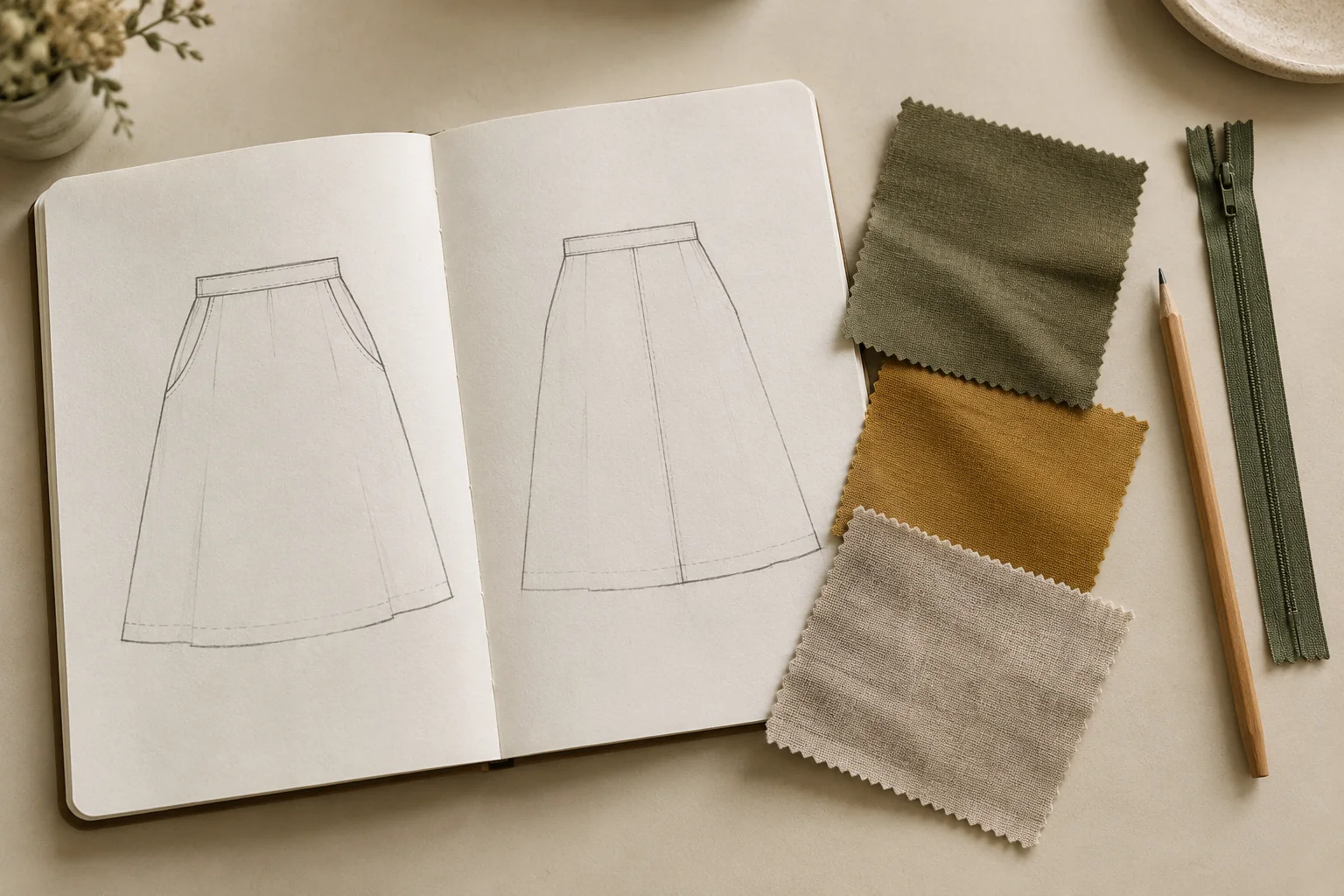
For the skirt example pictured above, a useful starting brief might be: “An everyday knee-length A-line skirt with two usable pockets. I like the olive colour and want a fabric that is comfortable for warm days. Pockets are essential; the fastening is flexible. I can attend a fitting.” Add your own dates and budget rather than relying on the picture to explain them.
Explain fit and measurements
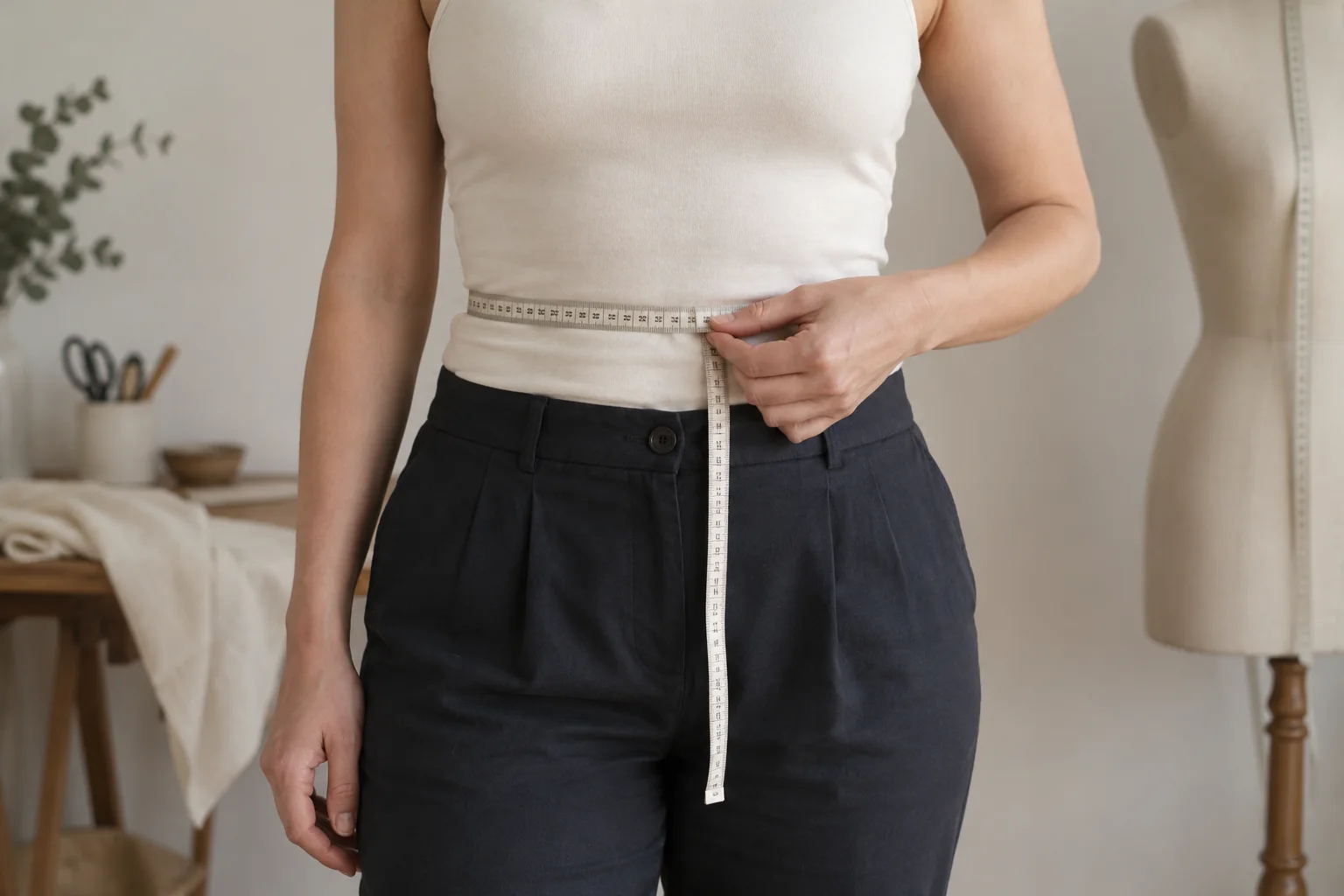
Provide the approximate clothing size requested in the enquiry form, but remember that brand sizes are not consistent. If measurements are needed, wait for instructions or use how to take body measurements for sewing.
Mention:
- areas where ready-made clothing often fits poorly;
- preferred room for movement or layering;
- sensory or mobility considerations relevant to the garment;
- whether the wearer can attend an in-person fitting; and
- changes in size expected before the required date, if relevant.
Share only information needed for the project. A made-to-order result still depends on agreed specifications, accurate measurements, fabric behaviour and fitting participation.
Add colours, fabric and care needs
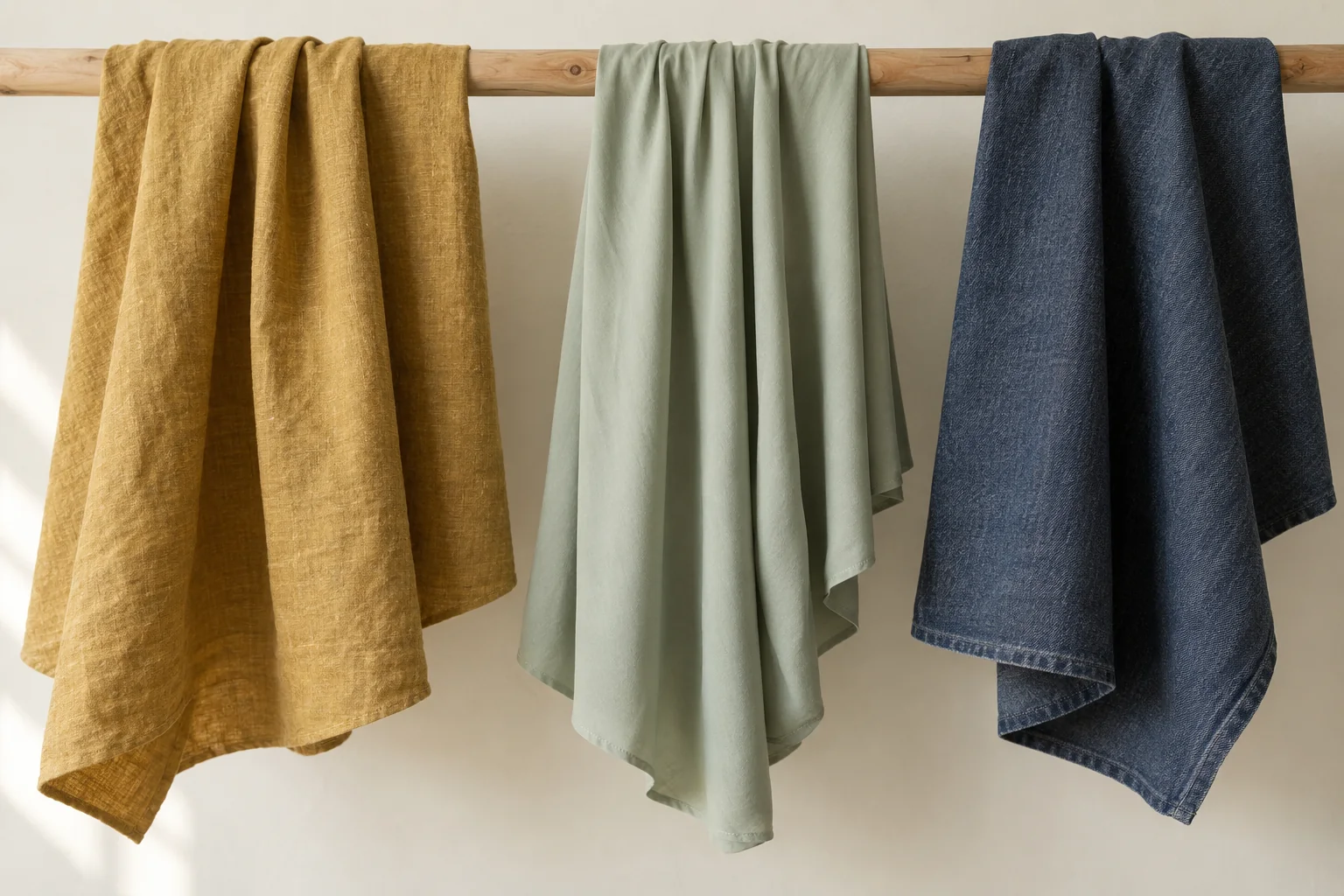
Describe colours or prints using references where helpful, but allow for screen and dye-lot differences.
For fabric, explain what you know and what you need:
- soft or structured;
- stretch or non-stretch;
- light, medium or heavy;
- opaque, lined or suitable for layering;
- machine washable or open to special care; and
- suitable for heat, frequent wear or a particular season.
Read choosing fabric for a sewing project before purchasing. Do not buy material based on a generic quantity estimate. Width, pattern repeat, nap, matching, shrinkage and the final design affect how much is needed.
If you already own fabric, include its fibre content and width if known, how much you have, whether it has been washed, and any faults or sentimental importance. Customer-supplied material may need inspection and may be declined if unsuitable.
Use reference images responsibly
Two or three focused references are usually clearer than a large mood board. For each image, say what you like: perhaps the sleeve shape in one, the colour balance in another and the overall length in a third.
Do not ask for an exact copy of another designer’s protected work. References communicate direction; they do not guarantee the same result with different fabric, construction and body proportions.
Use links in the initial form rather than uploading unnecessary personal files. Photos can be discussed after Kymmy reviews the enquiry.
Be open about timing
Include both:
- the date you would ideally like the item; and
- the true event or use date, if there is one.
Allow time for discussion, material sourcing, fittings and possible adjustments. Availability varies, and a requested date is not confirmed until the project is accepted with an agreed timeframe.
Urgent work may be declined even when the design itself is suitable.
Give a realistic budget range
A budget helps Kymmy assess whether the scope and material expectations are aligned. It is not an invitation to automatically charge the top of the range, and it does not create a quote.
State whether your range includes fabric and notions or is intended for labour only. Handmade work includes discussion, planning, fitting, cutting, sewing, finishing and sometimes sourcing—not only the final time at the sewing machine.
A simple brief template
Copy this structure into your notes before completing the enquiry form:
Item: [WHAT YOU WOULD LIKE MADE]
Purpose or occasion: [HOW AND WHERE IT WILL BE USED]
Approximate size: [SIZE]
Fit and movement: [HOW IT SHOULD FEEL AND FUNCTION]
Must-have details: [ESSENTIAL FEATURES]
Flexible details: [AREAS OPEN TO DISCUSSION]
Colour and fabric: [PREFERENCES OR CUSTOMER-SUPPLIED MATERIAL]
Fitting availability: [YES/NO AND GENERAL AVAILABILITY]
Ideal date and event date: [DATES]
Budget range: [AUD RANGE AND WHAT IT INCLUDES]
Reference links: [LINKS WITH A NOTE ABOUT EACH]
What happens after submission?
Kymmy will review the request and may ask questions, decline it, or invite further discussion. If the project appears suitable, the next steps may include refining specifications, confirming measurements or fittings, checking materials, and preparing a quote and expected timeframe.
Work begins only after the agreed quote and terms are accepted and any required deposit is arranged. Changes after that point may affect feasibility, cost and timing, so a clear brief helps everyone begin with the same understanding.
Further reading
Simplicity’s pattern-envelope guide is a useful introduction to the fabric, notions and finished measurements that turn an idea into a sewing specification.