Fabric and materials
Choosing fabric for a sewing project
An introduction to matching fabric weight, stretch, drape, care and availability to the item you would like made.
Before you begin
- Choose for the item's shape, movement and care needs as well as its colour.
- Check drape, opacity, stretch and recovery with a swatch where possible.
- Agree the design, fabric width and required quantity before buying.
Colour and print are only part of choosing a fabric. Weight, drape, stretch, texture, opacity and care requirements all affect how a finished item looks and behaves.
If you are considering made-to-order work, describe the result you want before buying fabric. Kymmy needs to assess the whole request, and customer-supplied material may not be suitable for the proposed design.
Begin with the intended item
Think about how and where the piece will be used:
- Does it need to withstand frequent washing?
- Should it hold a crisp shape or fall softly?
- Does it need stretch for movement?
- Will it be worn in warm weather, layered or lined?
- Does it need to resist wrinkles during travel?
- Is the fabric comfortable against the skin?
A structured bag, flowing skirt and fitted stretch top ask very different things of a fabric.
Weight and body
Fabric weight influences warmth, bulk and structure. A very light fabric may be transparent or unable to support a structured shape. A heavy fabric may make gathers bulky, alter the hang of a skirt or be unsuitable for fine details.
“Light”, “medium” and “heavy” are relative descriptions. If buying online, look for the listed grams per square metre, intended uses and swatch options, but remember that numbers do not fully describe feel.
Drape
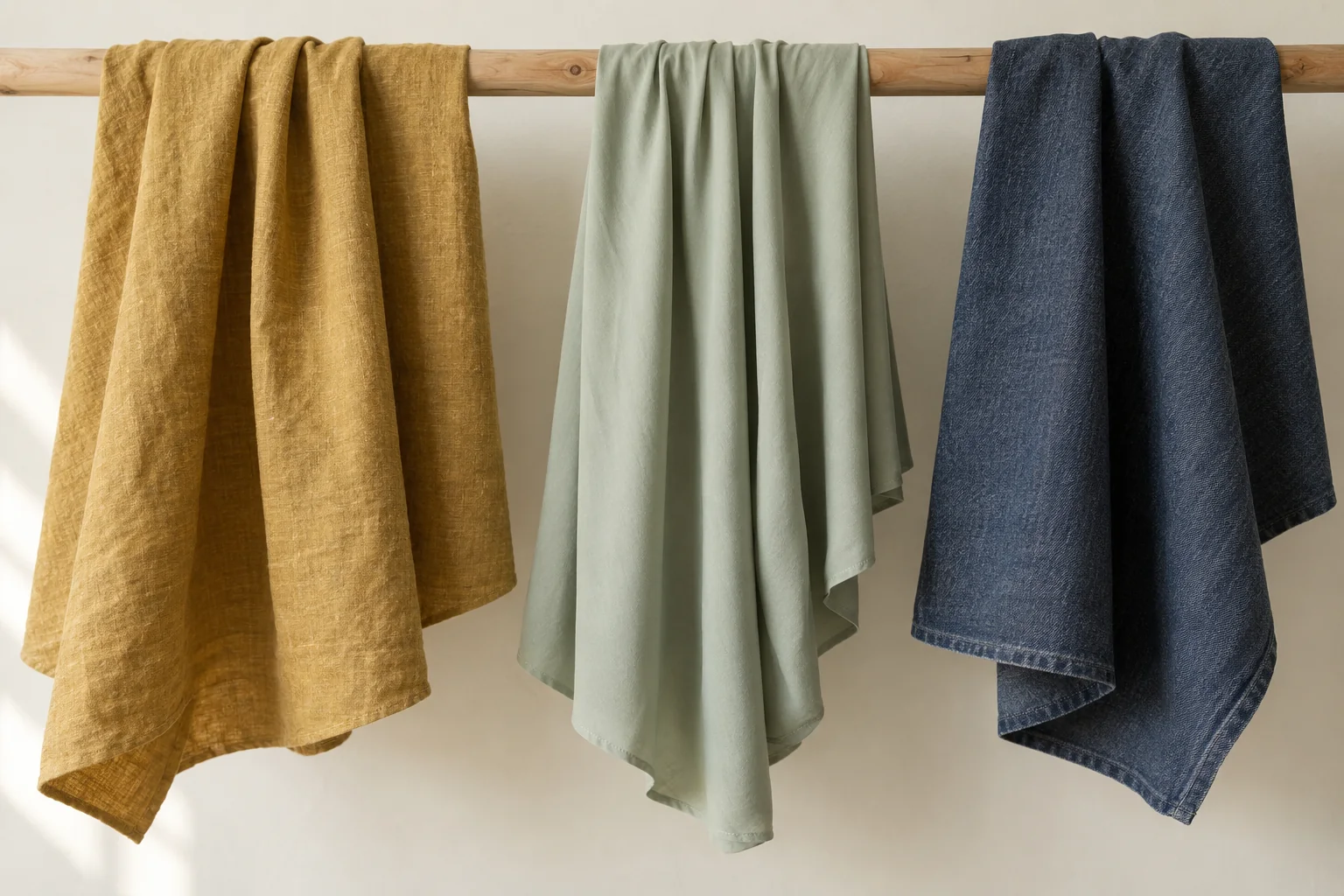
Drape is the way fabric falls and folds. Fluid fabrics tend to hang close to the body and create soft movement. Fabrics with more body hold their shape away from the body.
A reference image may depend on a particular drape. Using a noticeably different fabric can change the silhouette even when the same general construction is used.
Try these checks with a swatch
- Hang it over your hand. Notice whether it forms soft narrow folds or stands away in broader shapes.
- Hold it up to daylight. Check whether an underlayer or lining may be needed. A small sample will not show the full fall of a long garment.
- Gently stretch in each direction. Notice which way it gives and whether it returns to shape. Use the pattern’s specified test if a stretch percentage is required.
- Feel it against your skin. Consider texture, seams and whether it suits the intended use.
- Check the care instructions. Agree suitable pre-treatment before cutting; do not wash a fabric that requires a different treatment.
For Gold Coast warm-weather clothing, tell Kymmy how light, breathable and opaque you need the finished piece to feel. Fibre name alone does not determine comfort: weave, weight and lining also matter.
Stretch and recovery
Stretch describes how far a fabric extends; recovery describes how well it returns to its original shape. Both matter. A fabric that stretches but does not recover well may grow or sag during wear.
Patterns designed for stretch fabric often rely on a particular direction and percentage of stretch. Substituting a non-stretch fabric—or one with very different recovery—may make the design impractical.
Fibre and care
Fibre content can influence breathability, warmth, creasing, shrinkage, strength and laundering, but weave or knit structure and finishing also matter. Read the supplier’s care information and consider whether it suits your routine.
Ask whether the fabric should be pre-washed before cutting. Some materials may shrink, change texture or release excess dye. Delicate, coated, embellished or unknown fabrics may require special handling.
Directional prints and pattern matching
Stripes, checks, borders and one-way prints can require additional fabric to align motifs or place them attractively. A large repeat can significantly affect the quantity needed. Exact matching may not be possible at every seam, and this should be discussed before work is quoted.
Buying enough fabric
Do not rely on a generic estimate. The amount depends on the agreed design, size, fabric width, nap, print direction, pattern repeat, required matching and possible shrinkage.
Wait for an approved project specification and fabric requirement before purchasing where possible. Availability can change, so any sourcing plan should also account for matching thread, lining, interfacing, zips, buttons and other notions.
Customer-supplied fabric
Supplying fabric does not automatically make a request suitable or reduce every project cost. Kymmy may need to inspect the material and can decline to work with fabric that is damaged, unstable, insufficient, unsafe to handle or unsuitable for the intended result.
Keep receipts and retain supplier information. Mention any known faults, previous washing, unusual coatings, sentimental importance or difficulty replacing the material.
Discuss the project before committing
A made-to-order enquiry is the right place to describe the item, intended use, preferred colours, possible materials, timing and budget. It is not an accepted order. Kymmy will first decide whether the project is suitable and, if so, discuss specifications, a quote and an expected timeframe.
Further reading
Simplicity’s pattern-envelope guide explains fabric suggestions, width, quantity and stretch requirements. Seamwork’s Ruby fabric examples illustrate how fabric choice can change the same design’s silhouette.