Alterations
How to prepare for an alterations fitting
A practical checklist of what to wear, bring and discuss so an initial fitting can focus on the garment and the result you want.
Before you begin
- Bring the intended shoes, undergarments and any belt or removable straps.
- Wear the garment normally and explain what feels uncomfortable.
- Share the event date and previous alterations before work is agreed.
An alterations fitting is a chance to look at the garment on your body, discuss what feels wrong and agree on a realistic result. A little preparation can make that conversation much clearer.
This guide is general information. Every garment is different, and an in-person inspection is usually needed before work, price and timing can be confirmed.
Before you leave home
- Bring the garment clean and dry, following its care label; mention any marks that remain.
- Pack the actual shoes, bra or other layers you plan to wear with it.
- Bring detached buttons, straps, belts or matching spare fabric.
- Note your event date, the fit problem and the details you would like to keep.
- Confirm the appointment details with Kymmy before travelling.
Avoid cutting a hem or removing seams beforehand. Keeping the original construction intact gives Kymmy more information and preserves the available options.
Bring the shoes and undergarments you plan to wear
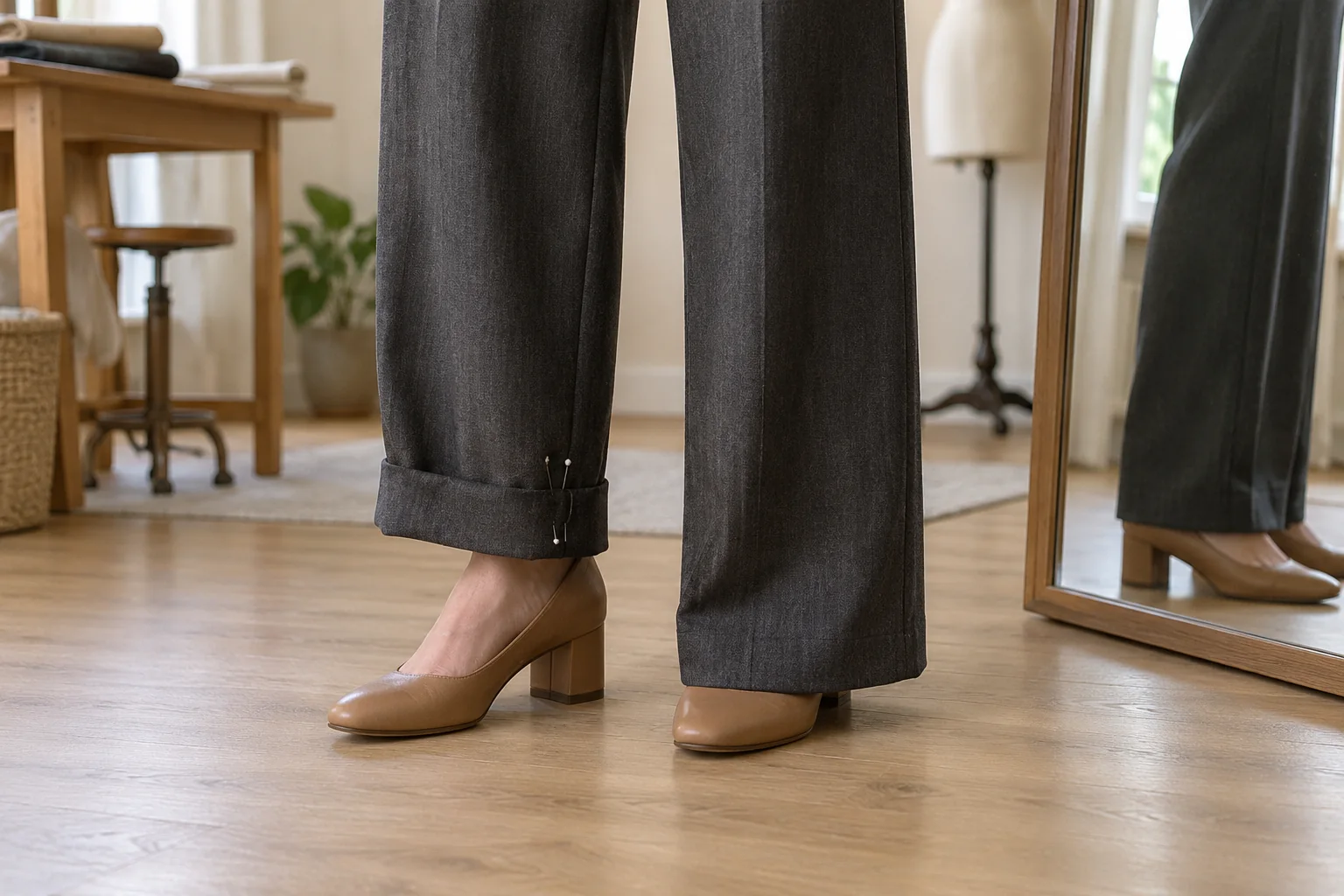
Shoes can change where a trouser or dress hem should sit. A different heel height may make a noticeable difference, so bring the pair—or a pair of the same height—that you expect to wear with the garment.
The bra, shapewear or other foundation garments worn underneath can also affect how formalwear and fitted clothing sit. Wear the intended undergarments where practical and comfortable.
Wear the garment as you intend to use it
Fasten all buttons, zips and closures, and bring any belt, detachable strap or accessory that affects the shape. If the garment will normally be tucked in, layered over another piece or worn with a jacket, mention this during the fitting.
For a hem, try to stand naturally rather than lifting the garment or changing your posture. The goal is to assess the way it falls during normal wear.
Once pins have been removed or secured and Kymmy says it is safe, check sitting, walking and reaching as relevant to the item. Tell her where it pulls or restricts movement; looking right while standing still is only part of fit.
Think about the problem and the priority
It helps to describe what you notice rather than arriving with only a technical instruction. For example:
- “The waistband gaps at the back.”
- “The sleeves cover my hands when I move.”
- “I need to walk and sit comfortably in this dress.”
- “I would like to keep as much length as possible.”
This gives Kymmy useful context when discussing possible approaches. Altering one area can affect another, and the most appropriate option may depend on seam allowance, construction, fabric, lining and decorative details.
Check and disclose the garment’s condition
Before the appointment, look for:
- stains, tears, worn areas or loose stitching;
- fragile fabric, sun damage or fabric that has become brittle;
- beads, lace, sequins or embellishment near the work area;
- earlier alterations, repairs or removed labels; and
- unusual value or sentimental importance.
Please disclose anything you know, even if it seems unrelated. Existing damage and previous work may affect what can be done safely.
Allow enough time
Enquiring early is helpful, especially for formalwear, events or work that may require more than one fitting. An event date is not the same as a guaranteed completion date: timing depends on the garment, the agreed work and current availability.
Avoid planning a first assessment immediately before you need to wear the item. Urgent work may not be suitable or available.
Bring inspiration carefully
A reference image can help explain a preferred length, shape or finish, but it does not prove that the same result is possible with your garment. Fabric, pattern pieces, seam allowances and construction methods all place limits on an alteration.
What happens after the fitting?
Kymmy can explain the proposed work after assessing the garment. A quote and expected timeframe must be agreed before work begins. If the garment needs further investigation or another fitting, that will be discussed rather than assumed.
Ready to ask about a garment? Use the alterations enquiry pathway to share the basic details first. A form submission is an enquiry only and does not reserve a booking or confirm a quote.
Further reading
Simplicity’s measurement guide explains why intended undergarments and a consistent natural-waist reference matter when assessing fit.